
LUCID
Cognitive sharpening. Enhanced focus, pattern recognition, and analytical clarity — the precision microdose for deep work.
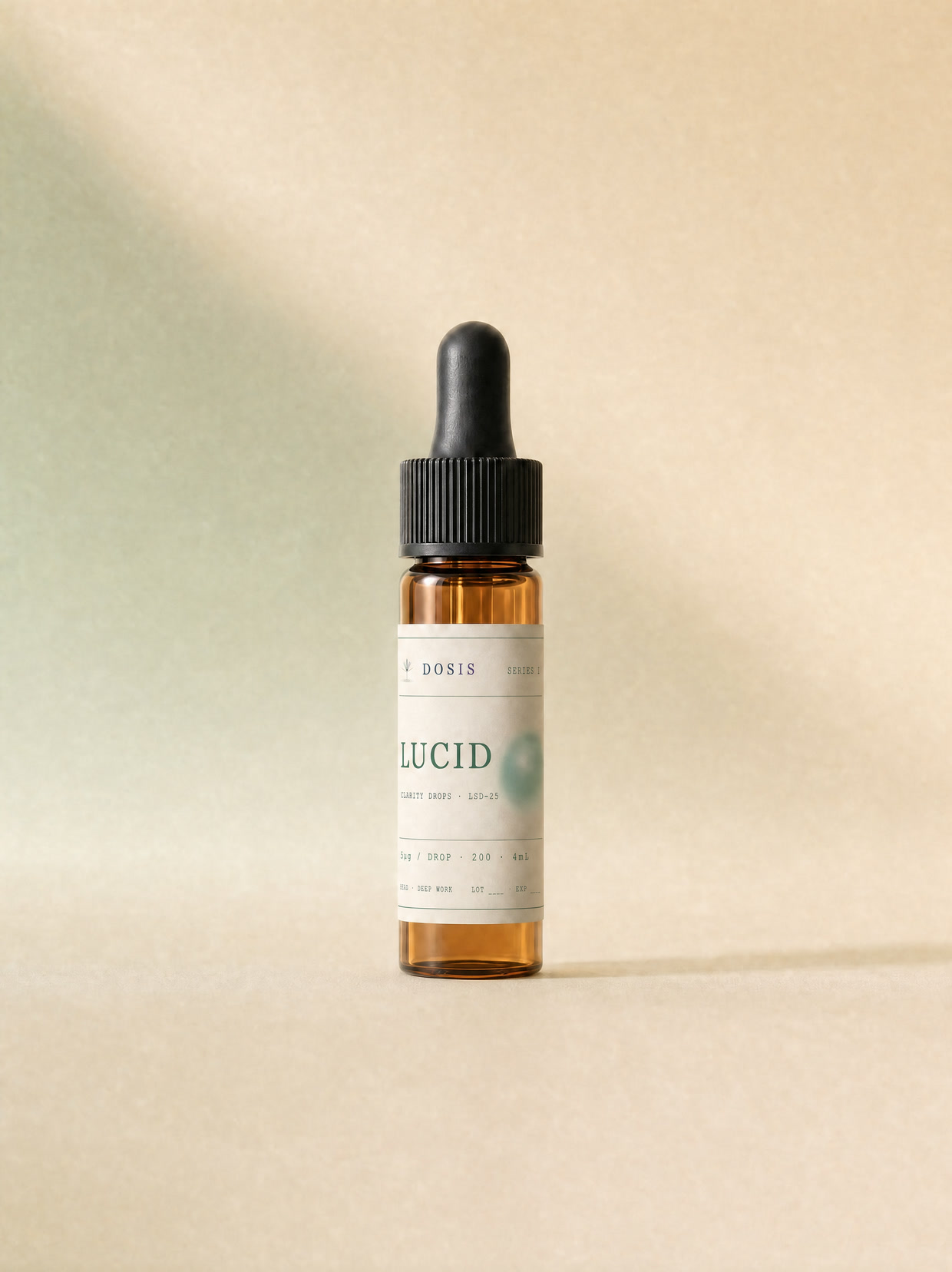
for deep work.
LUCID is LSD-25 at a sub-perceptual dose — enhanced, not altered. People reach for it to sharpen the ordinary working day. Here's the honest read on what it's used for.
DEEP WORK & FOCUS
Longer, calmer attention on hard problems — the most common reason people choose LSD-25 microdoses. A possible aid to a good work routine, not a substitute for one.
PATTERN RECOGNITION
Looser associations and a willingness to follow unusual ideas. Pairs well with open-ended analytical and creative work where there's no single right answer.
CLARITY & MOOD
A quiet lift in mood and less rumination are among the most reported effects — and the most placebo-sensitive. A complement to lifestyle, not a treatment.
The microdose is the first two drops. Start at the lowest dose, in the morning, and titrate slowly. The full dosing table, the calculator and the protocols live on the science page.
THE MICRODOSE
1–2 drops = 5–10µg. Sub-perceptual: a subtle lift, never a "high." If you can clearly feel it, you've taken too much.
WHEN
Morning. LSD is activating and late dosing can disrupt sleep. A light meal is fine; a heavy one slows onset.
HOW OFTEN
On a schedule with rest days (e.g. one on, two off). Cycle 4–8 weeks, then take 2–4 weeks off to reset tolerance.
Drag to see µg per drop — the lit band is the microdose range. The full dosing table and protocols live on the science page.
Each LUCID kit ships as a vial, formulation profile, protocol card, and seal.
Microdosing is generally low-risk at sub-perceptual doses, but some interactions are serious. This is the short version — read the full safety & interactions before you start.
LITHIUM — AVOID
Combining classic psychedelics with lithium is linked to seizures. The single most important interaction to respect.
ANTIDEPRESSANTS
SSRIs/SNRIs often blunt effects. Never stop prescribed medication to "feel" a microdose — talk to your prescriber first.
WHEN NOT TO
A personal or family history of psychosis or bipolar disorder, or pregnancy, are reasons to avoid. If unsure, involve a clinician.
LUCID is grounded in real pharmacology and an honest read of the evidence. The dedicated science page covers how LSD-25 works, the complete dosing detail, the protocols, and the primary research — including what's still unproven.
PHARMACOLOGY
How a single drop moves through you — 5-HT2A binding and the BDNF→TrkB→mTOR plasticity cascade.
FULL DOSING & PROTOCOLS
The complete dosing table, the interactive calculator, and the Fadiman, Stamets and every-third-day schedules.
PRIMARY RESEARCH
Peer-reviewed sources — including the placebo-controlled studies that complicate the optimistic story.